
Chess types
The 16 chess types
Your games carry your habits: what you aim for, how you treat risk, who drives the game, how unusual your moves are. A chess type sums up those four things in four letters.
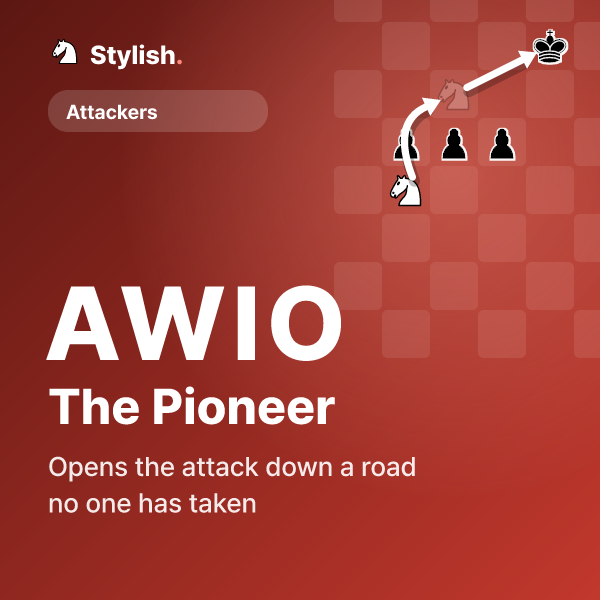
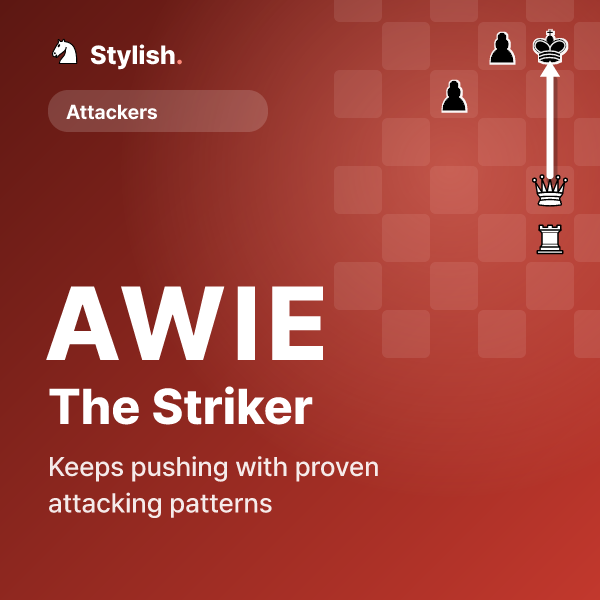
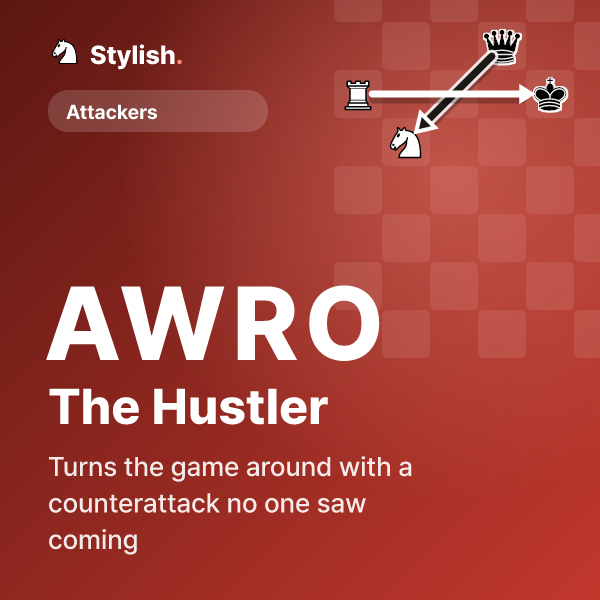
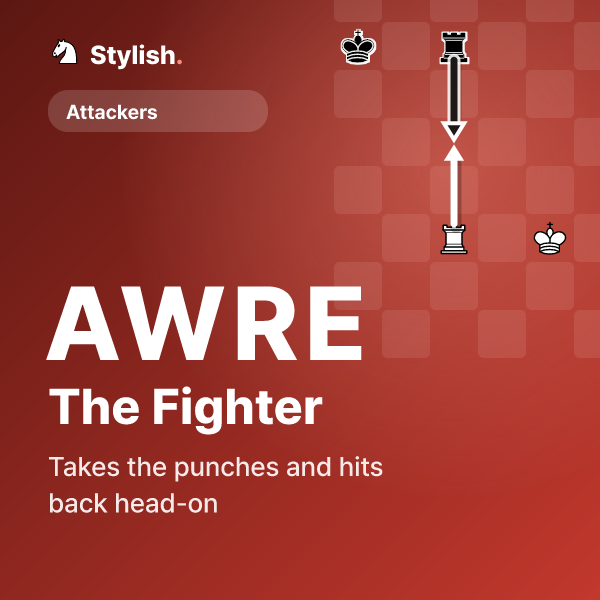
Attackers AW
Players who go for the attack and accept risk. The noisier the board, the stronger they get.
Precision AS
Players who aim to attack without overreaching, striking sharply inside a safe frame.
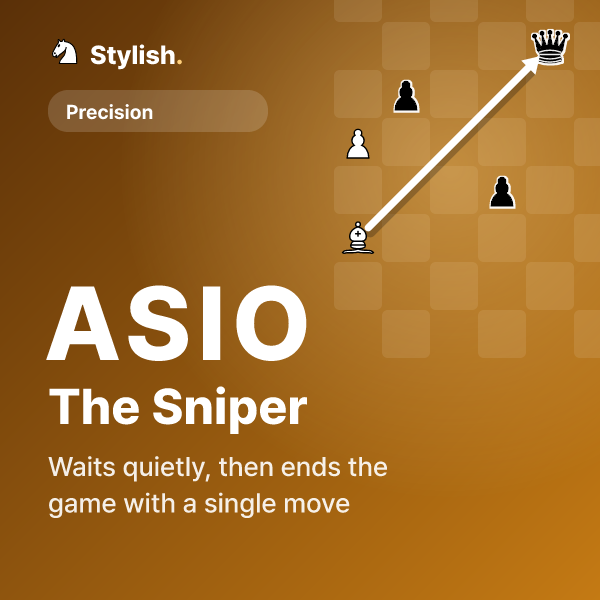
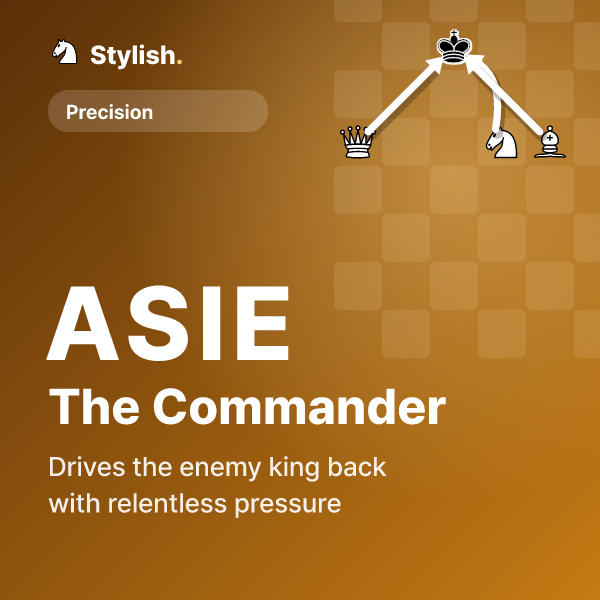
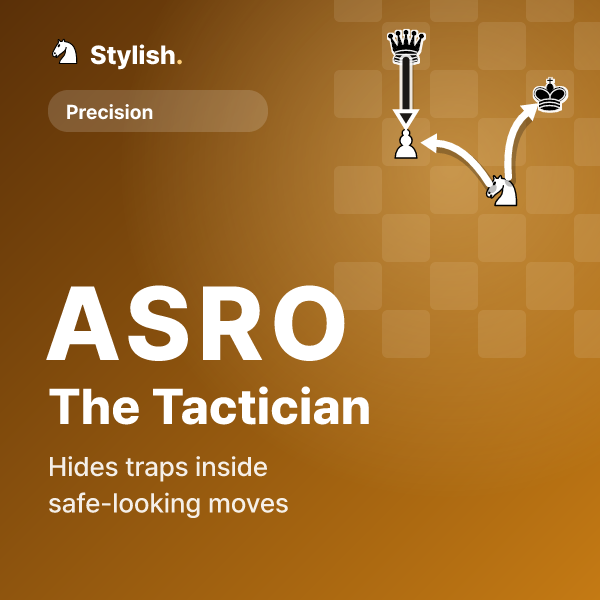
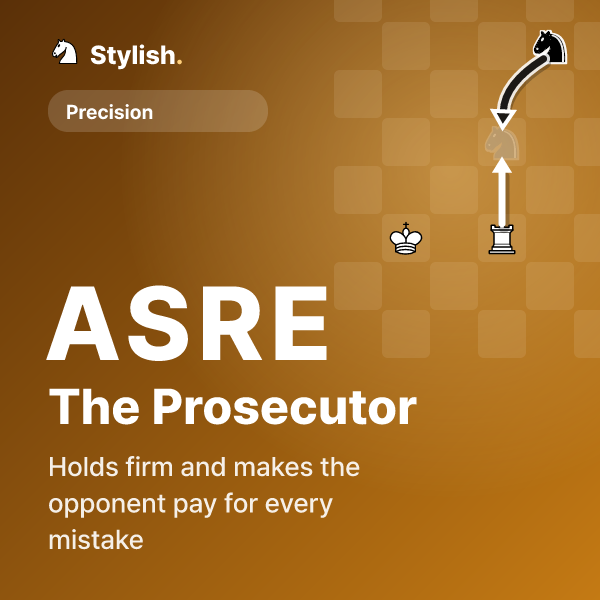
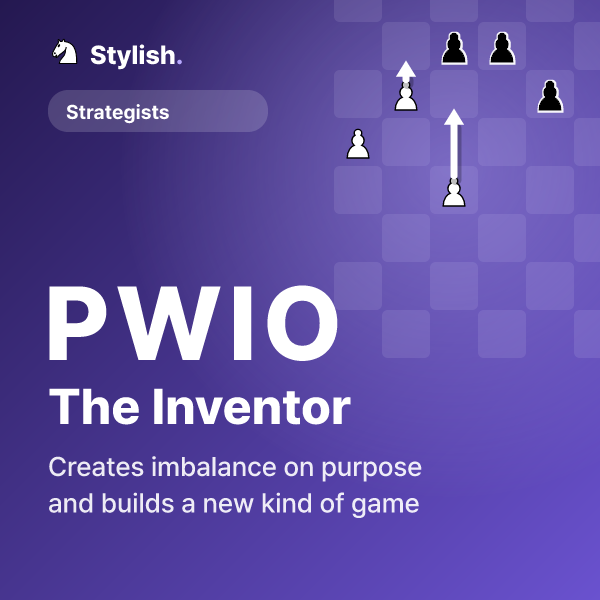
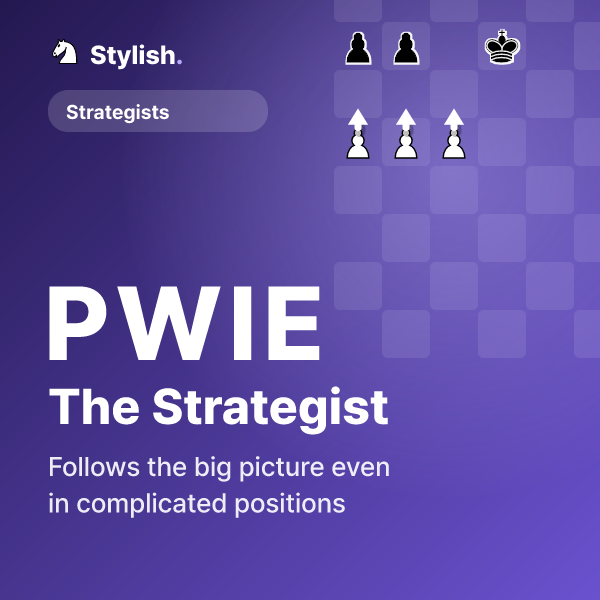
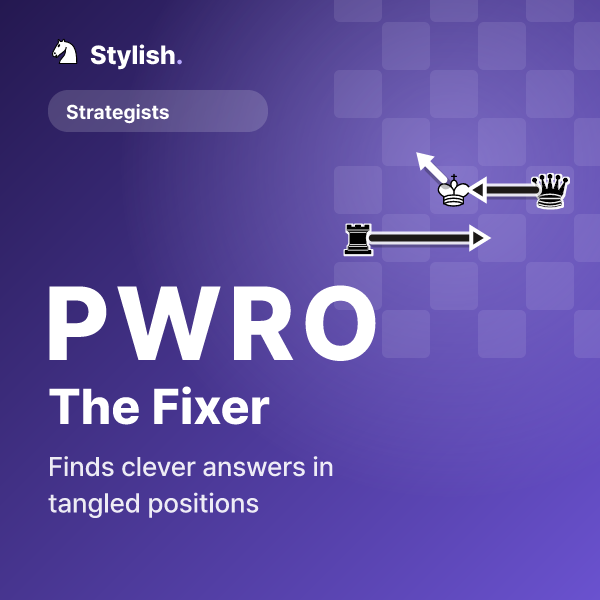
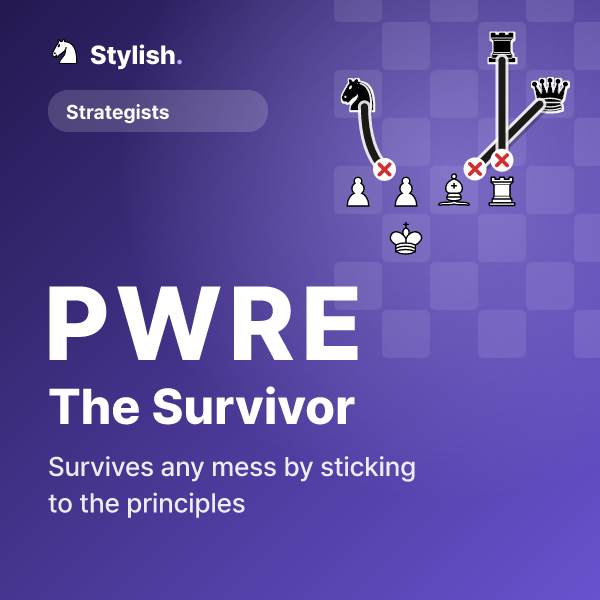
Strategists PW
Players who fight with structure and plans, and aren't afraid of complicated positions.
Stabilizers PS
Players who collect and keep small advantages, and win by making fewer mistakes.
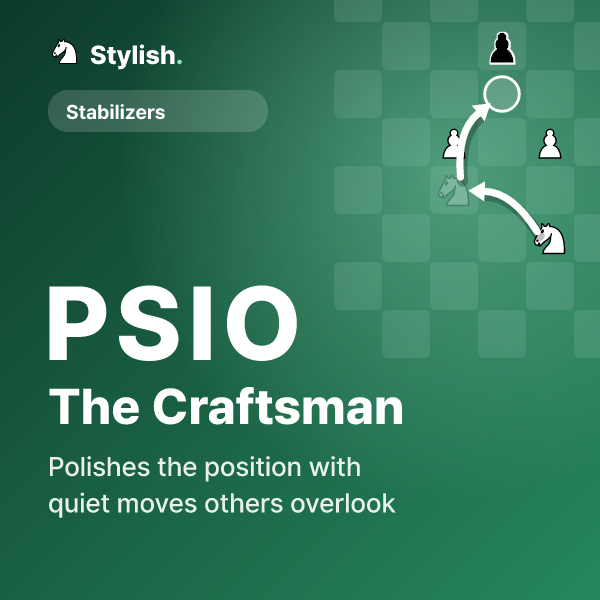
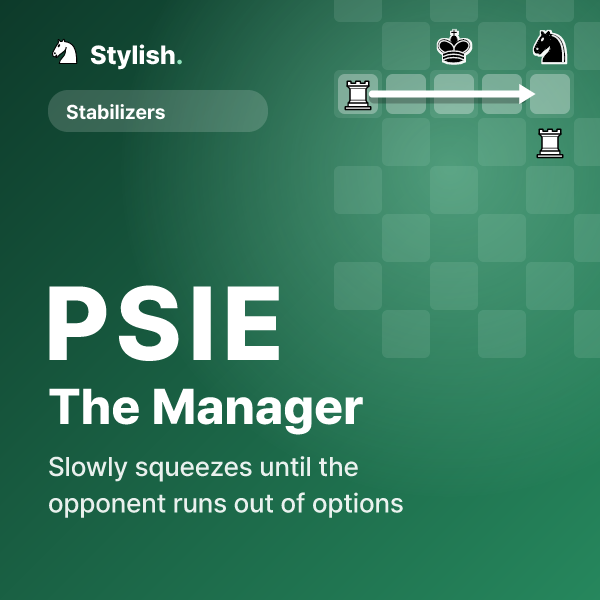
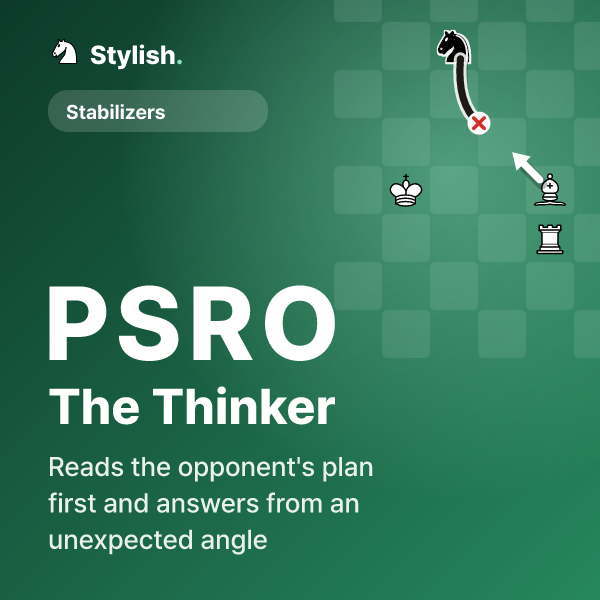
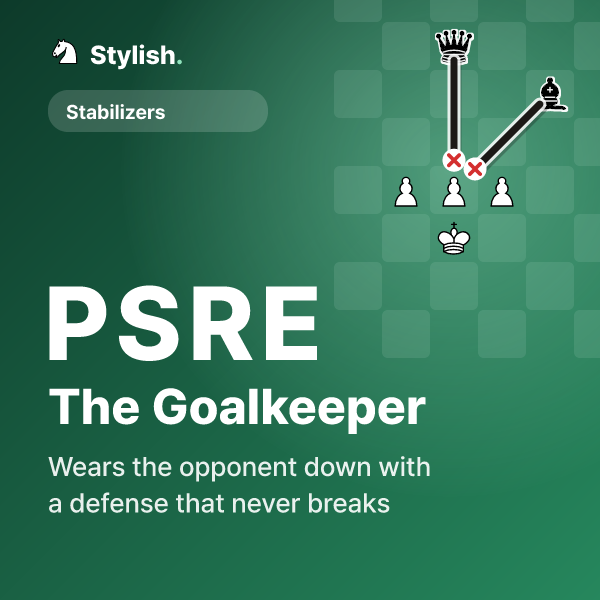
The four axes
A Many moves target the enemy king and pieces directly. High aggressive and tactical scores.
P Many moves build lasting advantages: pawn structure, weak squares, piece placement. High positional and prophylactic scores.
W You sharpen the position and enjoy risky choices such as traps, gambles and sacrifices.
S You prefer moves that hold up against any reply, and trades that tidy the position.
I You take the lead, forcing your opponent's replies with threats.
R You parry threats and wait for the right moment to strike back.
O You often play moves that people at your rating rarely play, according to the human-move model Maia3.
E You mostly play the natural moves people at your rating play. Not weaker, just the proven path.
How is it measured?
Stylish analyzes games you load from Chess.com or Lichess (or paste as PGN) right inside your browser. The chess engine Stockfish 19 scores every move on 19 styles, and Maia3, a neural network trained on real human moves, estimates how likely a human at the same rating is to play each move. Your 4-letter type comes from four axes built from the 8 main styles plus Maia3 originality.
The cutoffs weren't guessed. We analyzed real games from 479 Lichess players chosen across rating bands, from beginners to masters, the same way, and used the middle of that distribution. Because style changes with strength (lower-rated players play more checks and captures, for example), you are compared with players at your own rating. So each letter means "which side you lean toward among players of similar strength", and beginners and masters alike get all 16 types. For an accurate result we recommend 5 or more games, ideally 10.
A type is not a skill level
No type is stronger or weaker than another. World champions have had completely different types. A type describes how you tend to win and lose; knowing it lets you lean on your strengths and work on your weak spots deliberately. The same person can come out differently depending on time control or opponent, so the more games you analyze, the more accurate the result.